Why the “Nihilist Penguin” Video Is Going Viral in 2026 Science, Symbolism & Internet Meaning
A short clip of a lone penguin walking steadily toward distant mountains, away from its colony and the sea, has taken the internet by storm in 2026 earning the nickname the “Nihilist Penguin.” What began as a curious moment in a nature documentary has transformed into a viral meme that resonates with millions of social media users, sparking widespread discussion about life, purpose, and emotional burnout.
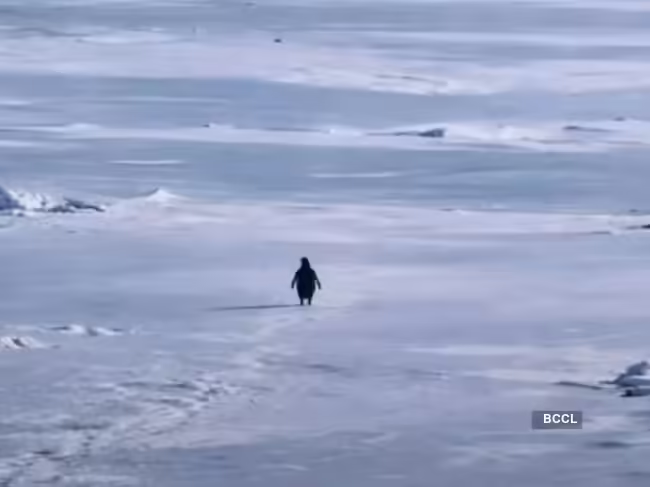
A single penguin walking inland toward a mountain range has become a viral symbol of existential thought and internet culture in 2026. (Source: Viral social media trends)
Key Points
- A clip of a lone penguin walking toward icy mountains has gone viral online in early 2026 and been dubbed the “Nihilist Penguin.”
- The footage originates from Werner Herzog’s 2007 documentary Encounters at the End of the World, where the penguin’s behaviour was called a “death march.”
- Internet users interpret the penguin’s slow, solitary walk as a metaphor for burnout, existential angst, and life’s uncertainties.
- Wildlife experts say such behaviour is rare but can be explained by disorientation, stress, or instinctual error rather than meaning.
- The meme’s popularity reflects broader cultural trends of human emotion projection and digital psychology in 2026.
Origins of the Viral Clip
The scene featured in the viral video comes from the 2007 documentary Encounters at the End of the World by German filmmaker Werner Herzog. In it, an Adelie penguin is shown breaking from its colony and walking inland toward a mountain range behaviour that is highly unusual for penguins, who normally stay close to the sea for food and survival.
The documentary narrator referred to the penguin’s trek as a “death march,” suggesting the animal was unlikely to return or survive such a journey.
Internet Interpretation & Meme Culture
Once resurfaced on social media platforms like Instagram, TikTok, and X, the clip quickly amassed millions of views. Users began captioning it with existential, humorous, or motivational lines such as “me walking away from everything” or “when life makes no sense.” These interpretations led to the viral nickname “Nihilist Penguin.”
This meme reflects how online cultures often project human emotions onto animal behaviour, using imagery to express feelings of burnout, rebellion, or quiet resignation.
Scientific Explanation
Despite the emotional meanings ascribed online, scientists emphasise that the penguin’s behaviour isn’t evidence of philosophical thought. Wildlife experts say such unusual walking patterns can occur rarely due to disorientation, neurological issues, or stress during the breeding season not any existential intent.
Penguins normally rely on environmental cues such as the sea’s presence; straying far inland is atypical and likely driven by instinctual error rather than purpose.
Cultural Impact & Meanings
The viral clip has reached beyond mere comedy it’s become a cultural touchstone illustrating how digital users find meaning in ambiguous moments. Whether seen as a symbol of existential fatigue, quiet rebellion, or emotional burnout, the “Nihilist Penguin” resonates with many who feel overwhelmed by life’s pressures.
In this way, the meme reveals not just internet creativity, but broader trends in how modern society grapples with stress and purpose.
FAQs
What is the “Nihilist Penguin”?
The “Nihilist Penguin” refers to a viral clip showing a penguin walking away from its colony toward mountains, which internet users interpret as symbolic of existential angst and emotional exhaustion.
Where did the original video come from?
The footage is from the 2007 documentary Encounters at the End of the World by Werner Herzog, where the scene was described as a “death march.”
Is the penguin actually existential or philosophical?
Scientists say no penguins don’t have philosophical intent; the behaviour is likely due to disorientation or instinctual error.
Why has this meme become so popular?
The meme resonates because many people project human emotions like burnout, alienation, or a desire for escape onto the penguin’s slow, solitary walk.